
It’s the rivers that dominate Keith’s and my time during the spring, when the water is higher than normal, a result of winter runoff and April/May showers. It’s an annual reunion, of sorts, greeting old friends that we have paddled dozens of times before, and it’s almost always a congenial experience, except for the occasional fallen tree, requiring portaging, or poison ivy, lurking near the shoreline.
With its lighthouses, beaches, and abundant shoreline, Michigan often feels like one giant waterway from Great Lakes to inland lakes to rivers and creeks—miles and miles of silvery streams that seem to blend together into an endless rush of water, always heading to one of the Great Lakes.

Usually narrow and lively, these rivers move along at a pleasant pace, sometimes throwing in a Class 1 rapid to keep us alert; yet, are typically so shallow that one can almost always easily stand with the water at barely knee-level.
And each river has a distinct personality: Sturgeon—sly and crooked for its sharp turns; Ocqueoc—bubbly and cheerful due to particularly fast water; Au Sable—stately and old fashioned: home to fly fishing and the 74-year-old Canoe Marathon; Black—shadowy as its name implies, where ancient Sturgeon swim; and the list of rivers goes on and on from Pigeon to Pine to Platte to Boardman to Jordan, ad-infinitum.
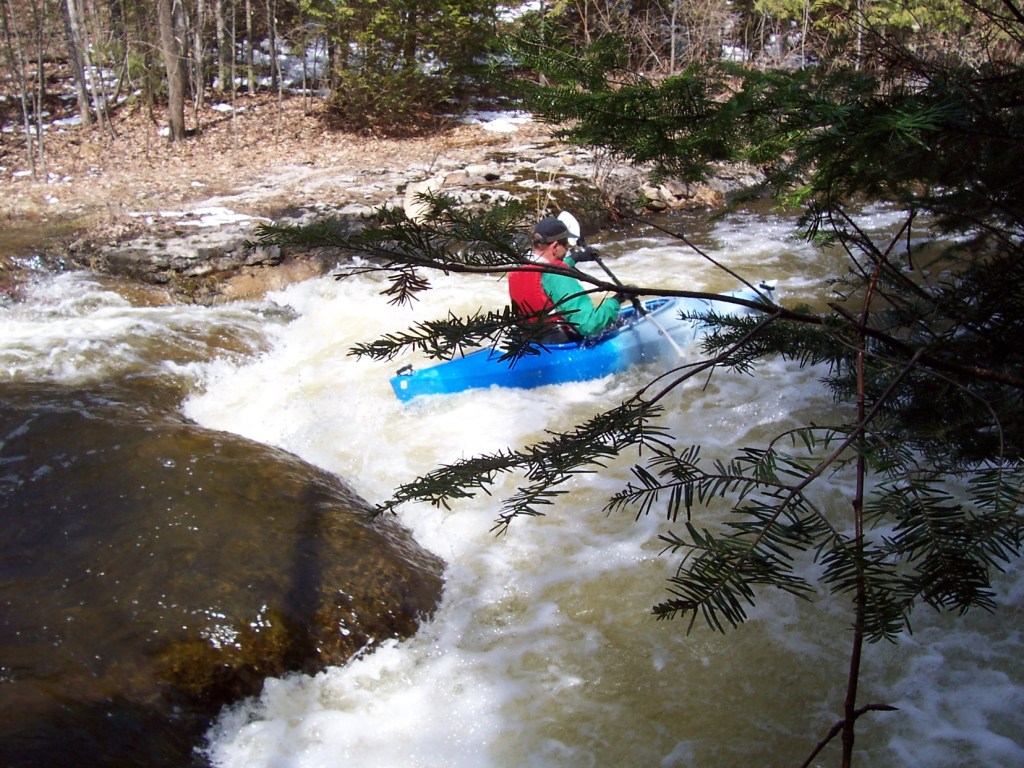
Despite their familiarity, these rivers always bring a sense of wonder, an appreciation for the intricacy of Mother Nature’s craft—a desire to sit still and allow the world to unfold.
As Sue Monk Kidd, one of my favorite authors, wrote in When the Heart Waits: Spiritual Direction for Life’s Sacred Questions, “To know exactly where you’re headed may be the best way to go astray. Not all who loiter are lost.” And, so, enjoy the paddling but also remember to loiter, allowing yourself to get lost in the music of the rivers, slipping along to their unique rhythms.
 N. Michigan River Paddling